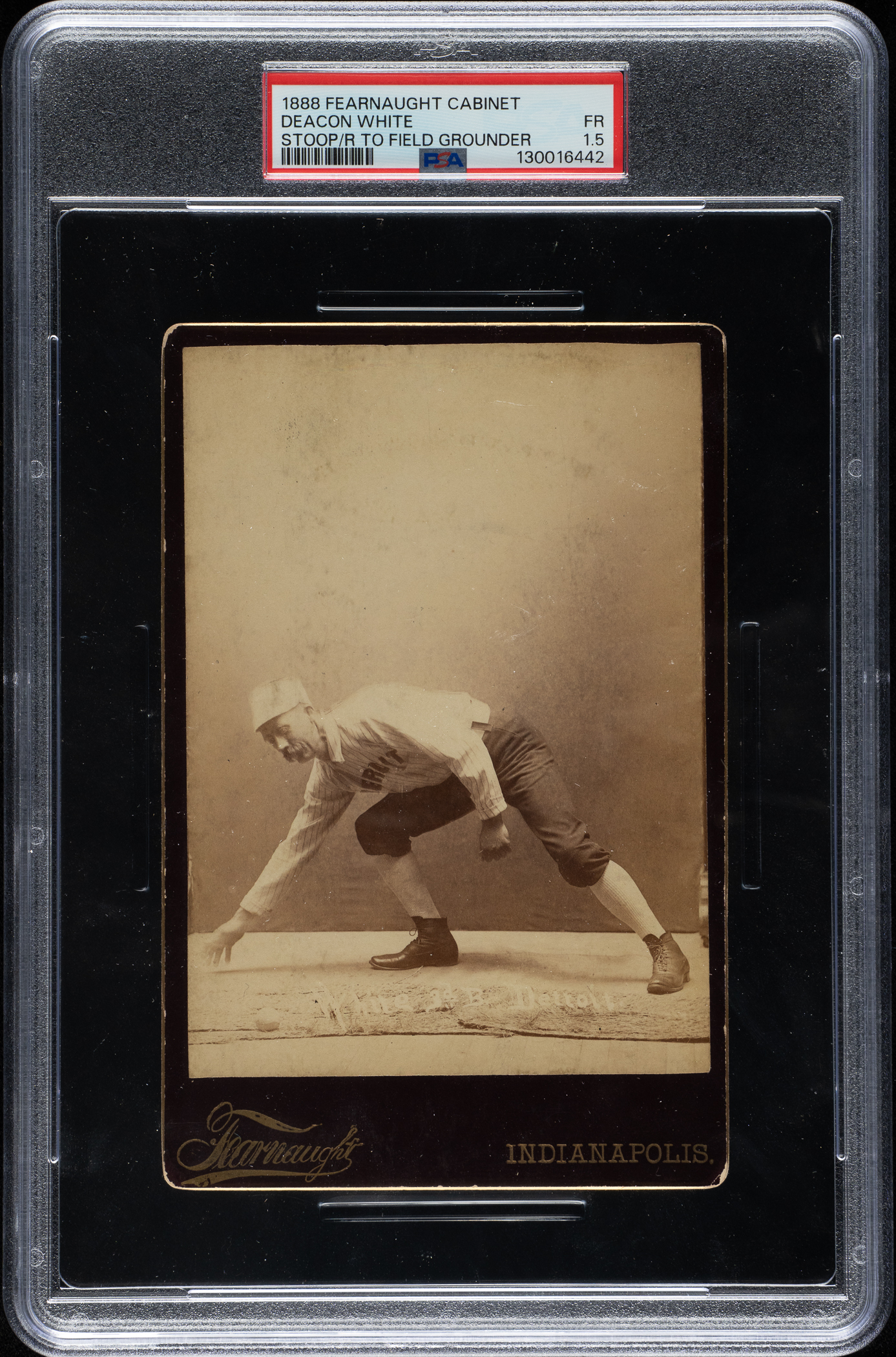
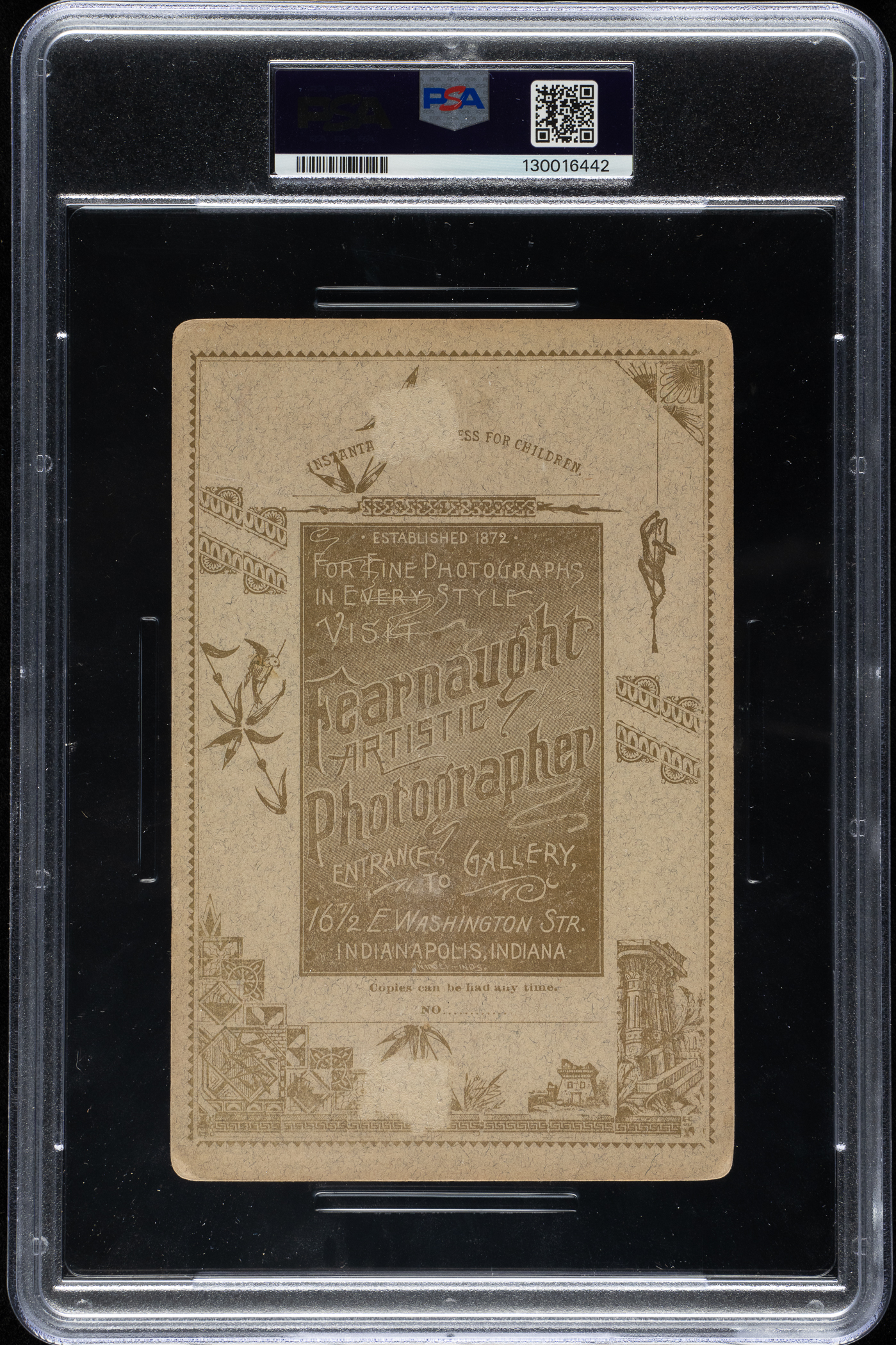
Lot # 122: 1888 Fearnaught Cabinet Deacon White PSA FAIR 1.5 - N173 Old Judge Proof - The ONLY Graded Example!
Info
This lot is closed. Bidding is not allowed.
Item was in Auction Fall 2026, which ran from Fri, Nov 20, 2026 12:00 PM to Sun, Dec 6, 2026 9:59 PM
Starting Bid:
$1,500
Bids:
(Bid History)
Current Bid
$
High Bidder
Out Bid
Total Bid Cost
| Next Bid | $ |
| Buyer's Premium | $ |
| Sales Tax (estimated) | $ |
| Shipping Fee (estimated) | $ |
| Total Cost | $ * |
* Shipping and sales tax calculations are 'best guess' estimates based on your current shipping address. Final calculations may vary at billing.
Description
Graded FAIR 1.5 by PSA. This is the ONLY example that has ever been graded by PSA! 1888 N173 Goodwin Old Judge cabinet proof of Hall of Famer Deacon White, third baseman of the Detroit Wolverines. Produced by Fearnaught Photographic Studios of Indianapolis, the card features the player identification "White, 3d B., Detroit" at the base of the photo in white lettering. As part of the production process for the N172 set, Goodwin & Co. would contract with various photographers to obtain original images from staged photo shoots done in their studios. The "proof" cabinets produced by these studios, such as Fearnaught, were provided not only to Goodwin and other companies for their commercial use but were also often given to players, family, or made available to the public as a means of advertising for the respective studio. In the offered cabinet photo, which has exceptional clarity, White is depicted leaning to field a grounder (Pose #496-8). A very elaborate advertisement for the Fearnaught studio appears on the reverse. White was one of the game's top players during the early years of professional baseball. Considered the finest bare-handed catcher of his day, he began his career with Cleveland in 1871 before joining Harry Wright's Boston Red Stockings in 1873. White helped lead Boston to three consecutive pennants before moving to other teams, including Detroit, where he teamed with Dan Brouthers, Hardy Richardson, and Jack Rowe. White attained league-leading marks in batting and RBI at various points during his career and retired after the 1890 season with a .312 average. In addition to his individual achievements, White is also remembered for his innovations with regard to the catching position. White was not only the first professional catcher to wear a mask but also the first to wear a glove and the first to stand directly behind the batter with no one on base. The cabinet card (4.25 x 6.5 inches) displays modest corner wear and a small area of paper loss on the reverse. This would be a significant and worthy addition to even the most advanced 19th century baseball collection.
Loading...
You Might Also Like
Suggestions of other lots in this auction
Suggestions of other items in the marketplace
Buy Now – $7,500

Buy Now – $75,000

Buy Now – $4,000
Buy Now – $65,000

Buy Now – $4,250

Buy Now – $1,000

Buy Now – $1,350
