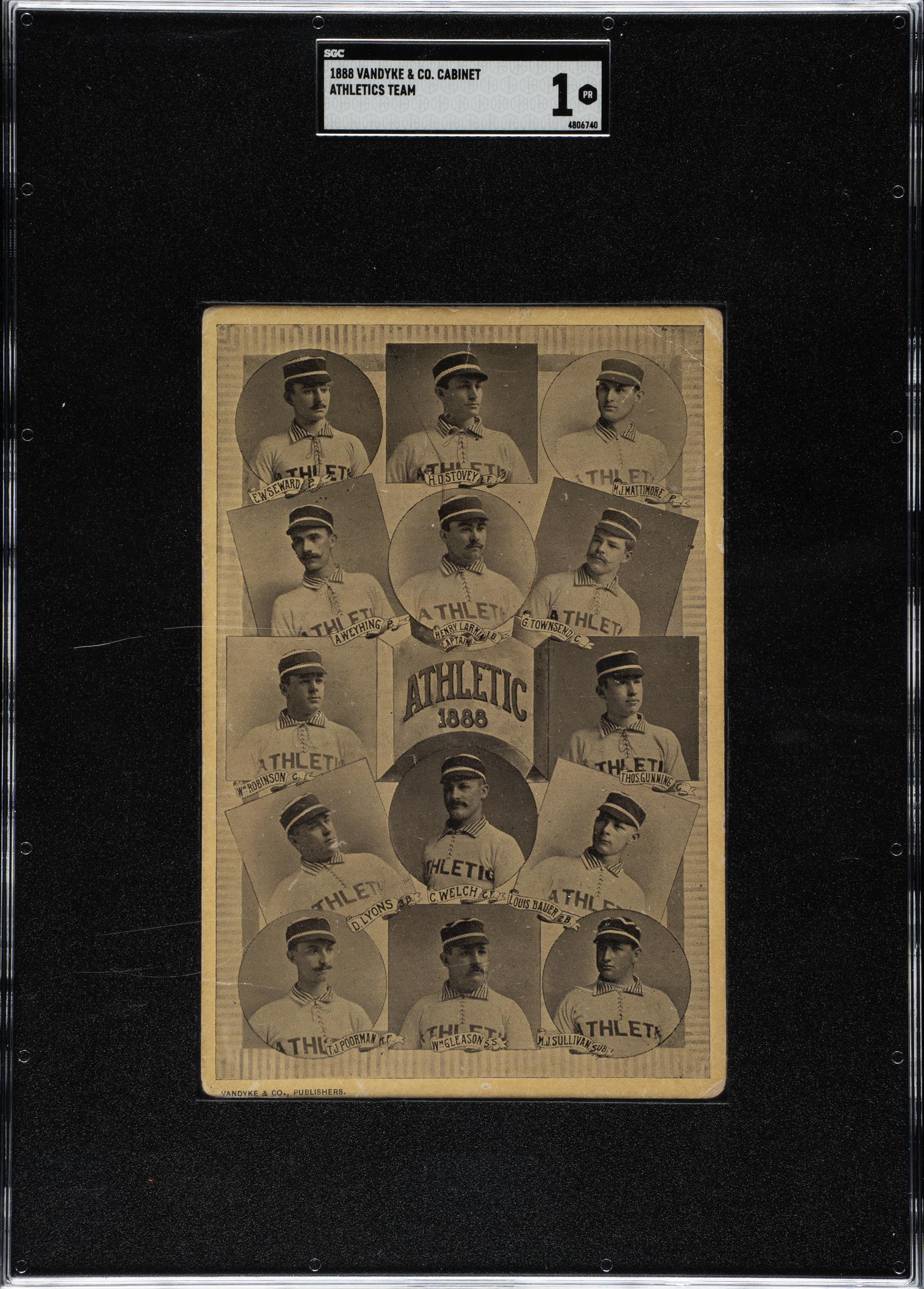
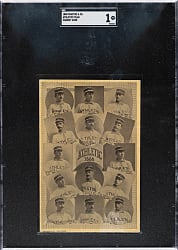
Lot # 104: 1888 Philadelphia Athletics Team Cabinet with Wilbert Robinson SGC POOR 1
Info
This lot is closed. Bidding is not allowed.
Item was in Auction Fall 2026, which ran from Fri, Nov 20, 2026 12:00 PM to Sun, Dec 6, 2026 9:59 PM
Starting Bid:
$500
Bids:
(Bid History)
Current Bid
$
High Bidder
Out Bid
Total Bid Cost
| Next Bid | $ |
| Buyer's Premium | $ |
| Sales Tax (estimated) | $ |
| Shipping Fee (estimated) | $ |
| Total Cost | $ * |
* Shipping and sales tax calculations are 'best guess' estimates based on your current shipping address. Final calculations may vary at billing.
Description
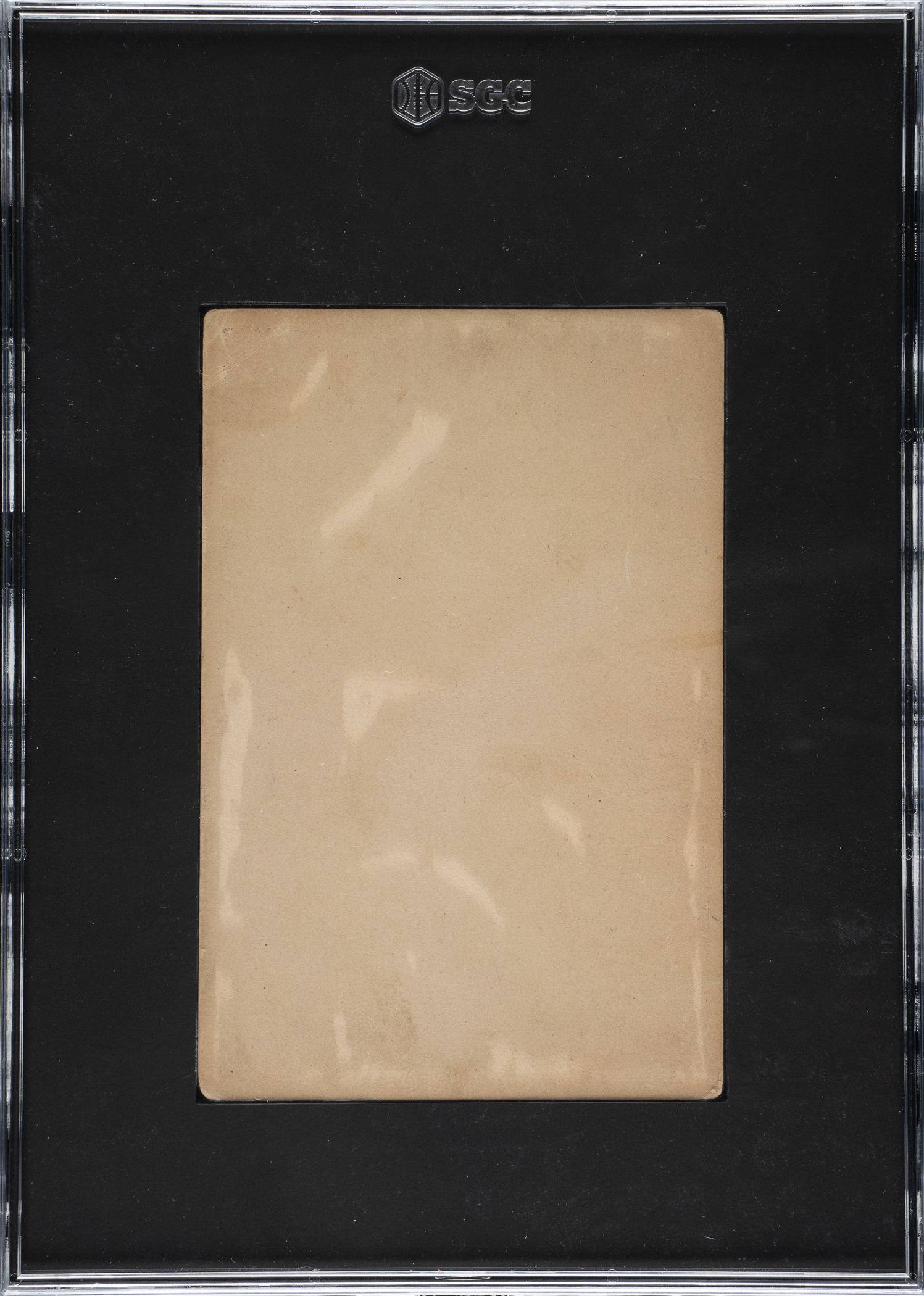
Extremely rare team cabinet card of exceptional quality featuring bust-length composite images of 14 members of the 1888 American Association Philadelphia Athletics, including Hall of Famer Wilbert Robinson. The remaining players pictured, all of whom are identified by name directly below their images, are Ed Seward, Harry Stovey, Mike Mattimore, Gus Weyhing, Henry Larkin (designated as team captain), George Townsend, Tom Gunning, Denny Lyons, Curt Welch, Lou Bierbauer (spelled "Bauer" on the card), Tom Poorman, Bill Gleason, and Mike Sullivan. All the photos are formal studio poses picturing the players in uniform. Published by "Vandyke & Co." as noted along the base. This is a particularly distinctive and beautifully designed nineteenth-century team cabinet card, and appears to be a unique "one-card set" produced by Vandyke & Co. for the team. While we have seen a handful of other examples over the years, all have been the 1888 Philadelphia Athletics; we have never seen another team. Philadelphia was a member of the American Association during its entire ten-year existence (1892-1991). Despite leading the league in several offensive categories in 1888, including team batting average (.250), runs (827), slugging percentage (.344), doubles (183), and triples (89), the Athletics could manage no better than third place, finishing 10 games behind the pennant-winning St. Louis Browns. Wilbert Robinson made his Major League debut with the Athletics in 1886 and remained with the club for four-and-a-half years before later enjoying greater fame as a member of the legendary Baltimore Orioles. The card (4.25 x 6.5 inches) exhibits superb photo clarity. Graded POOR 1 by SGC, the card is downgraded due to scattered creasing and paper loss along the reverse.
Loading...
You Might Also Like
Suggestions of other lots in this auction
Suggestions of other items in the marketplace
Buy Now – $7,500
Buy Now – $65,000

Buy Now – $4,250

Buy Now – $1,800

Buy Now – $1,300

Buy Now – $1,350
Buy Now – $5,995